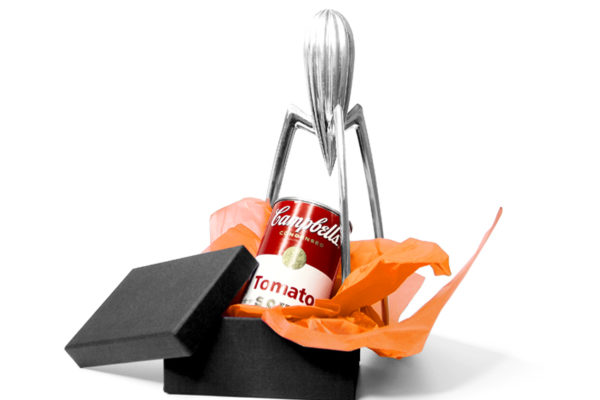
WHEN PACKAGING STOPS BEING AN OBJECT
and becomes a (complex) decision
There is a moment—quite a common one in many packaging projects—
when you realise you are no longer just deciding on a box.
You are balancing brand, sustainability, costs, operations, timelines, consumer perception, and risks that are not always visible at first glance.
And you know that any choice—no matter how small it may seem—will have consequences beyond the product itself.
This is the real context in which many packaging decisions are made today, even if they are sometimes still presented as “just another development”.
From this perspective, it makes sense to rethink how we use B2B trade fairs— and, above all, what role they play within increasingly complex decision-making processes.
THE SILENT SHIFT IN PACKAGING TRADE FAIRS
For years, the model was clear:
the stand as a showroom, the product as the argument.
Today, the scenario is different.
Visitors to specialised trade fairs such as Paris Packaging Week rarely come to “discover” suppliers from scratch.
They arrive with references, established partners, ongoing processes, and open decisions.
That’s why many conversations at trade fairs are no longer about what can be done, but about what makes the most sense in each specific context.
This shift is not exclusive to packaging.
McKinsey has analysed how B2B sales have evolved towards a hybrid model, where in-person touchpoints no longer function as isolated acquisition channels, but as key moments within a longer, more informed and more distributed decision journey.
In this context, the trade fair stops being a showcase.
It becomes a decision accelerator.
WHEN SHOWING IS NO LONGER ENOUGH

Data reinforces this perception.
Recent studies from Forrester point to a decline in satisfaction with traditional B2B events.
Not because trade fairs have lost value, but because the classic format no longer matches what many attendees expect:
- real interaction
- meaningful conversation
- perspectives that help them make decisions
And yet, trade fairs remain highly relevant.
The industry itself—through reports by UFI in collaboration with Oxford Economics—confirms that the economic and relational impact of exhibitions is still enormous, provided they are understood as part of a broader ecosystem of decisions and relationships.
The question is no longer whether to attend a trade fair.
The question is why.
FROM “SHOWING” TO “THINKING TOGETHER”
In packaging—especially within luxury and premium sectors—one thing has become clear:
Decisions are no longer purely technical,
nor purely aesthetic.
They are complex decisions.
Because they simultaneously cut across:
•industrial feasibility
• sustainability (real, not declarative)
• safety and regulatory compliance
• brand coherence
• consumer experience
• logistical and operational efficiency
Many of these variables appear internal.
But their effects are entirely external.
Today, brand reputation is also built through decisions that used to live in the back office.
Which material is chosen.
How it is manufactured.
What can be explained—and proven—to the end consumer.
This is where packaging becomes a clearly B2B2C territory.
PARTNERS IN COMPLEX PACKAGING DECISIONS
This perspective is the foundation of our approach to Paris Packaging Week.
Not as a cosmetic change to the stand, but as a change of role.
We believe that today the value is not in having quick answers,
but in asking the right questions.
That is why we talk about partners rather than suppliers.
Because in complex contexts, no one decides alone.
And no one decides well without contrast.
Our claim summarises it clearly:
WE MAKE IT WORK.
We ensure that decisions work in the real world—technically, industrially, and operationally.
YOU MAKE IT RELEVANT.
Our clients define priorities, context, and success criteria.
THEY MAKE IT MEMORABLE.
The consumer turns a well-made decision into an experience that lasts.
Between these three levels, the packaging decisions that truly matter today are made.
THE STAND AS A THINKING SPACE
With this logic, the stand stops being a place to show everything we know how to do.
It becomes a space to structure conversations.
We don’t ask for briefs.
We don’t ask for projects.
We don’t promise universal solutions.
We share decision frameworks.
Because in packaging, there is no such thing as “the best option” in the abstract.
There is the most coherent option, depending on what you want to protect, communicate, optimise, or transform.
AN INVITATION
At Paris Packaging Week, we’re not coming to talk about products.
We’re coming to talk about decisions.
The kind that are not always visible,
but that determine whether a project works, stands up… or truly consolidates.
At our stand, we will share five complex decisions
that appear again and again in real packaging projects today.
Not as closed cases.
But as starting points to think together.
If packaging in your day-to-day work is no longer just a box,
but a responsibility that cuts across brand, business, and consumer,
we will probably have something to talk about.
See you at Paris Packaging Week
5–6 February, stand D70
Readings that inspired this approach
This article is part of a broader reflection on how B2B sales are changing, the evolving role of trade fairs, and how complex decisions are made in industrial contexts.
Some recent readings that have influenced this perspective:
- McKinsey — The Future of B2B Sales Is Hybrid
On how B2B decision processes now combine digital, human, and in-person channels. - Forrester — State of B2B Events 2025
An analysis of the pressure on traditional event formats and the new expectations of attendees. - UFI & Oxford Economics — Global Economic Impact of Exhibitions
A macro view on the economic and relational relevance of trade fairs within the global business ecosystem.