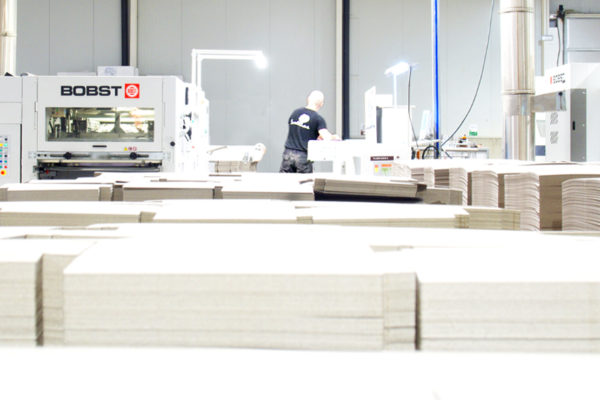
PARTNERS IN TRUST
Choosing a supplier is no longer just a technical decision.
More and more brands understand that it is also an ethical one.
It is not only about complying with regulations or signing codes of conduct, but about working with partners who understand that how something is produced matters as much as what is produced. Partners who do not simply execute, but who take responsibility, act transparently, and know how to say “no” when something is not right.
When we talk about PARTNERS IN TRUST, we are talking precisely about this: a relationship in which ethics are not delegated or solved through a contract, but are built day by day through real decisions, consistency between words and actions, and a shared vision of industrial, social, and environmental impact.
The From Waste to Opportunity project was born from this way of understanding the relationship with clients, suppliers, and the local environment. Not as a one-off gesture or a communication exercise, but as the result of assuming that responsibility is also part of industrial work.
What follows is not a speech.
It is a concrete example of how that responsibility is translated into systems, decisions, and real impact.
From Waste to Opportunity
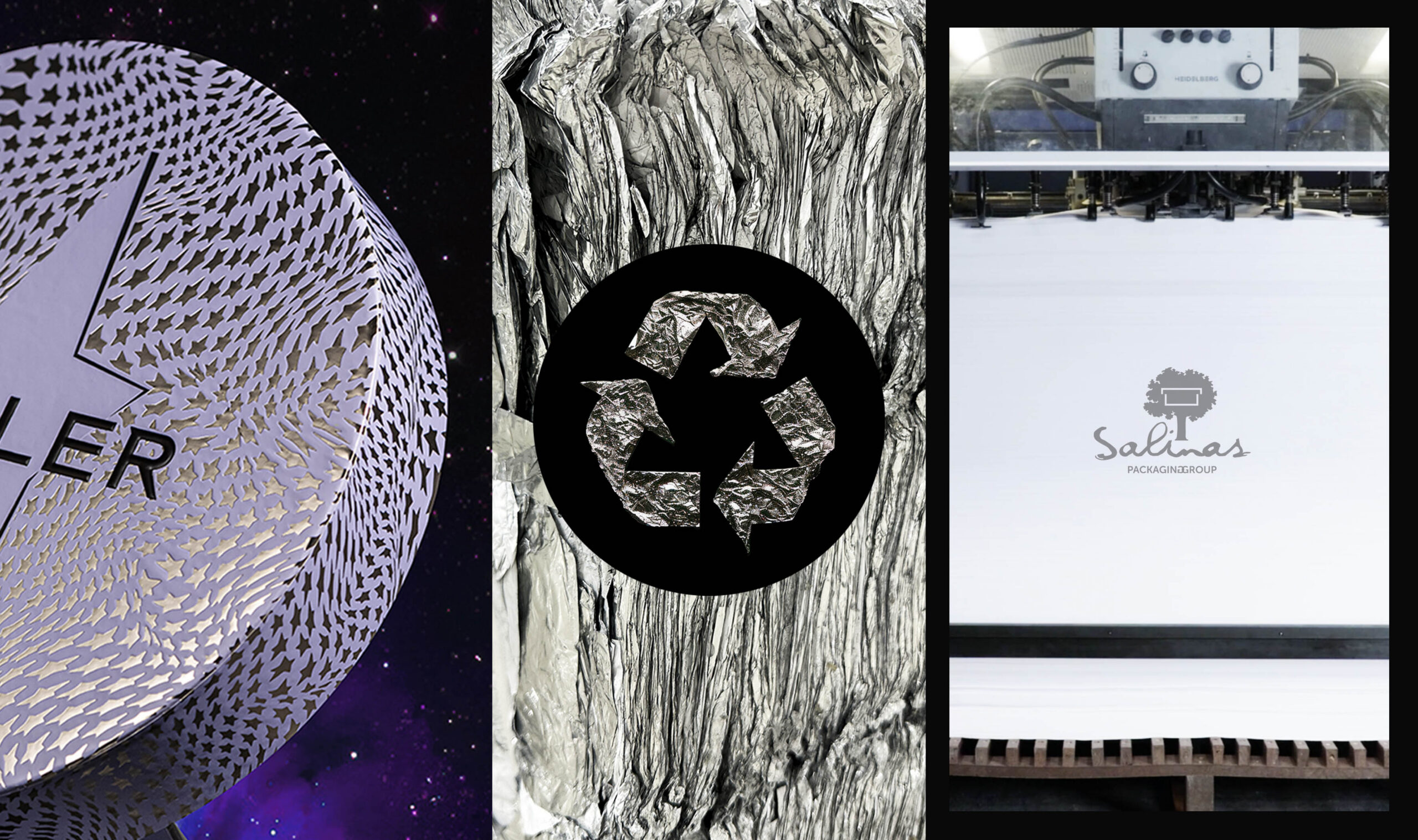
When circular economy becomes a real industrial system
Salinas Packaging Group presents From Waste to Opportunity, a pioneering circular economy project that transforms a non-recoverable industrial waste into a useful and durable resource, while generating inclusive employment and reinforcing its commitment to Zero Waste, Positive Social Impact and Responsible Luxury.
Recently recognised by a partner company, this initiative marks a milestone in the company’s sustainability strategy, where sustainability is now embedded at a strategic level under a NET Positive vision:
To give back to the planet and to society more value than is taken.
Turning the impossible into reality
The project starts from one of the most complex industrial wastes in the packaging sector: hot stamping foil, composed of multiple layers of different materials (PET, aluminium, adhesives, release layers, etc.).
It is important to underline that hot stamping applied to paper does not hinder the recyclability of the final carton in any way. The transferred metallic layer is extremely thin and can be processed through standard de-inking and paper and cardboard recycling systems.
The real challenge lies elsewhere: in the residual industrial foil left after the process. A heterogeneous material whose usual destination has traditionally been incineration or landfill due to its complex composition and format.
The project began with a search for waste recovery partners capable of meeting the strict requirements of Zero Waste certification.
That search led to Solteco, currently the only company in Spain capable of melting this rejected plastic and transforming it into a pioneering material for urban furniture and multiple other applications.
Thanks to this collaboration, hot stamping foil is transformed into plastic wood: a stable and reusable material that can be reintroduced into new production cycles.
“Our process allows the complete melting and transformation of multilayer plastic waste into a stable and reusable material, without water consumption and without generating waste. This technology proves that it is possible to bring resources that traditionally had no outlet back into the production cycle.” José Vicente Sainz, CEO – Solteco
Inclusion that multiplies impact
By the express wish of Solteco’s CEO, all the plastic wood generated is sent to a small carpentry workshop in Villena, just a few kilometres from Salinas Packaging Group’s headquarters in Alicante.
The workshop is operated by Integrados, a special employment centre dedicated to the training and integration of people with disabilities into the labour market.
There, a 100% inclusive workforce transforms the recycled material into new products, reinforcing a circular, local model with real social impact.
“Our purpose is to show that sustainability is also built through people. Turning waste into a useful material is important; transforming it into real job opportunities is what makes this project truly extraordinary.” Paco Punzano, Managing Director – Integrados
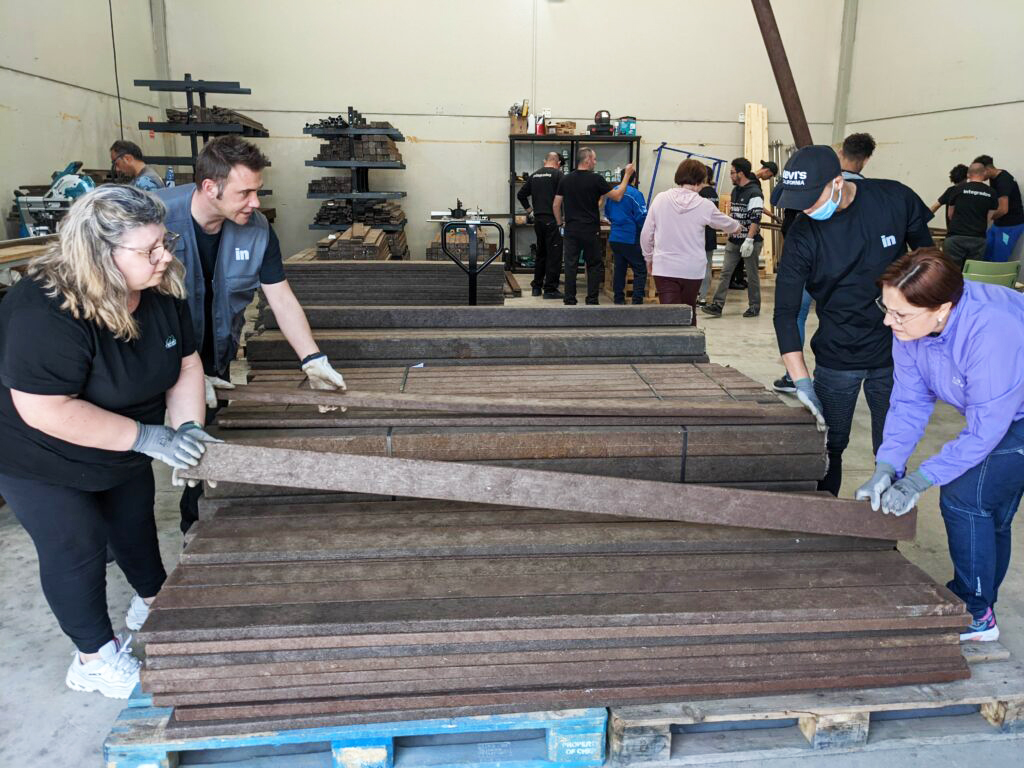
From Waste to Opportunity thus becomes more than an industrial innovation: it becomes a complete cycle that benefits biodiversity, the economy and the local community, where each step contributes to a more responsible, collaborative and inclusive future.
NON-STOP technology: when circularity enters the production line
The project reaches a new level thanks to the vision of Salinas Packaging Group’s Innovation Team, which took the development one step further.
In collaboration with Solteco and Integrados, the company designed a NON-STOP pallet to operate under a continuous production philosophy at its Colour Centre, inaugurated in 2024 and equipped with state-of-the-art printing and finishing technologies, including hot stamping.
Integrated into the printing lines, this system enables continuous pallet feeding and unloading without stopping the machine, optimising production flow and ensuring process stability.
How it works
- Plastic wood pallets manufactured by Integrados using Solteco’s recycled material are fed into the NON-STOP system.
- Equipment operates without interruptions, reducing downtime, restart errors and associated waste.
- Pallets are then managed through a NON-STOP delivery system, maintaining continuity even in long or automated runs.
Circularity is therefore embedded directly into the production mechanics, closing the loop from waste generation to its reintegration into the manufacturing chain as a durable and functional support.
“The key lies in designing systems that not only recycle complex materials, but also integrate this new resource into real industrial processes. The NON-STOP pallet proves that innovation and sustainability can move forward together, generating efficiency and value across the entire chain.” Roberto López, Director of Innovation and Product – Salinas Packaging Group
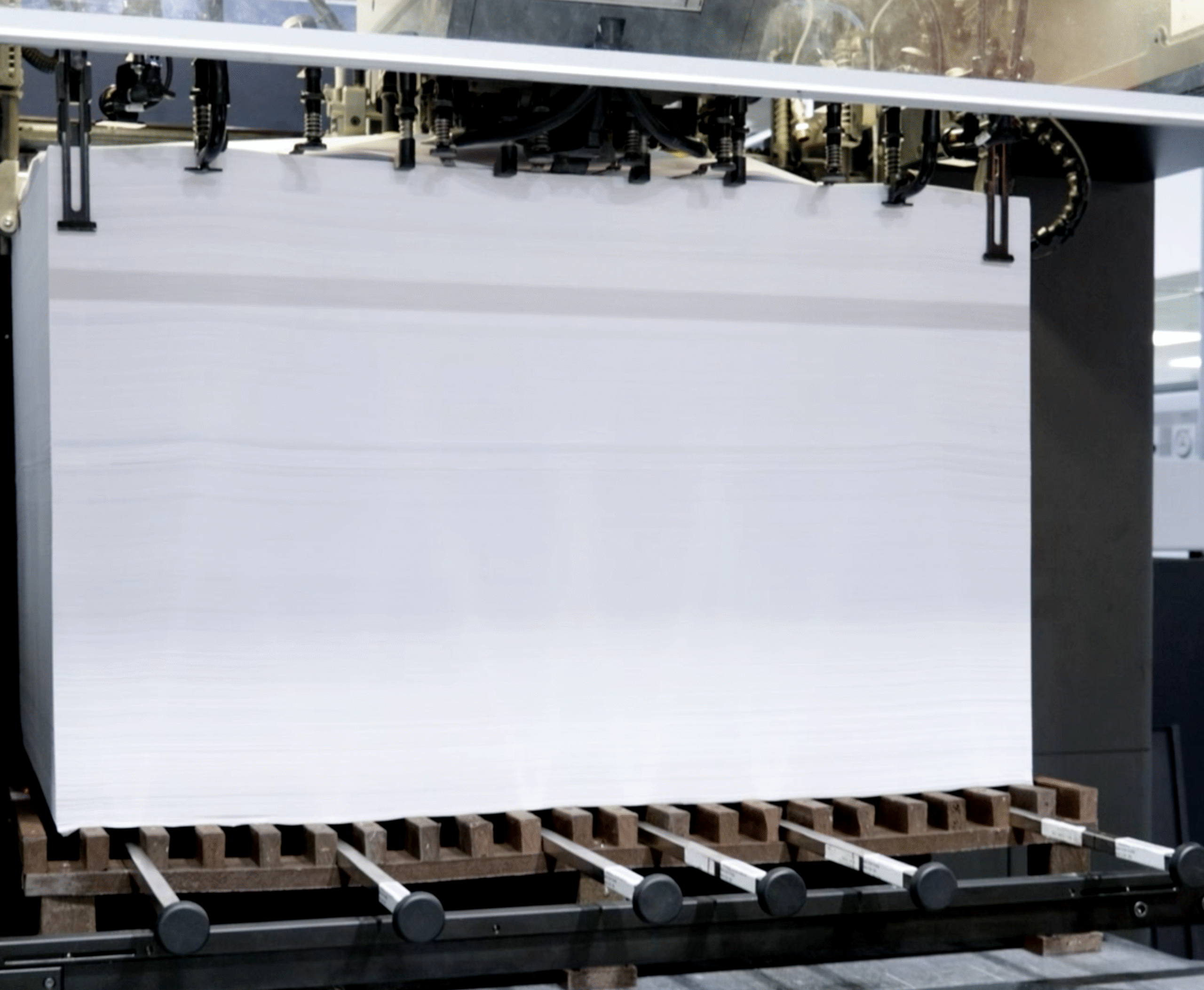 The result is a technological ecosystem that maximises productivity (24/7), reduces waste, automates operations and promotes the use of circular resources in a highly demanding industrial environment such as luxury packaging.
Recognition that validates the model
From Waste to Opportunity translates sustainability principles into something tangible.
It shows that it is possible to generate a positive impact on employees, clients and the local environment while evolving towards a more responsible and collaborative production model, capable of balancing impact and profitability.
The project received recognition at the event “Acknowledgements: Mundo Madérica”, held on 6 November at the Círculo Agrícola Mercantil Villenense in Villena (Alicante), where public, social, educational and business organisations working towards a more sustainable and humane world were acknowledged.
For Salinas Packaging Group, this recognition validates a collective effort that brings together technology, circularity and social inclusion to deliver solutions with real benefits for people and the environment.
“We have demonstrated that it is possible to transform complex waste into a useful resource, integrate it into advanced production environments and generate inclusive employment in the process. That is the future of responsible luxury, and we are proud to be moving in this direction.” Carmen Yago, Communication and ESG Director – Salinas Packaging Group
Impact in figures
100% waste recovery
Hot stamping foil is fully converted into plastic wood.
+12,000 kg of waste diverted from landfill/incineration (per typical project)
A material historically without an outlet finds a second life.
33.6 tonnes of CO₂e avoided per 12,000 kg of recovered waste
Based on 2.8–3.1 kg CO₂e per kg of PET incinerated.
0 litres of water used
Clean and efficient recycling.
0% waste
100 kg of waste = 100 kg of raw material.
Infinite recyclability
Plastic wood can be continuously reintroduced into new production cycles.
Direct social impact
Inclusive employment generated through Integrados.
Real circular application: the NON-STOP pallet
Recycled material returns to SPG’s industrial chain as a productive support.
More efficient printing processes
In systems such as Heidelberg Speedmaster, fixed consumption is spread over larger continuous production volumes, improving energy efficiency and enabling estimated savings of 15–20%.